Spending a night in the Agafay Desert: what to expect
From the moment the car leaves the tarmac to breakfast the next morning. What happens, what it costs, and why the two hours around sunset and sunrise are the reason to stay rather than visit.
A day trip to Agafay shows you the landscape. A night shows you why people write about it. The difference is two hours: the one before dark and the one after first light, and a day pass that ends at six in the evening misses both of them.
Here is what an overnight stay actually involves, in order.
Arriving
Aim to arrive in the late afternoon rather than at midday. There is nothing to do at two in the afternoon that you cannot do better at five, and the light between five and seven is the reason you came.
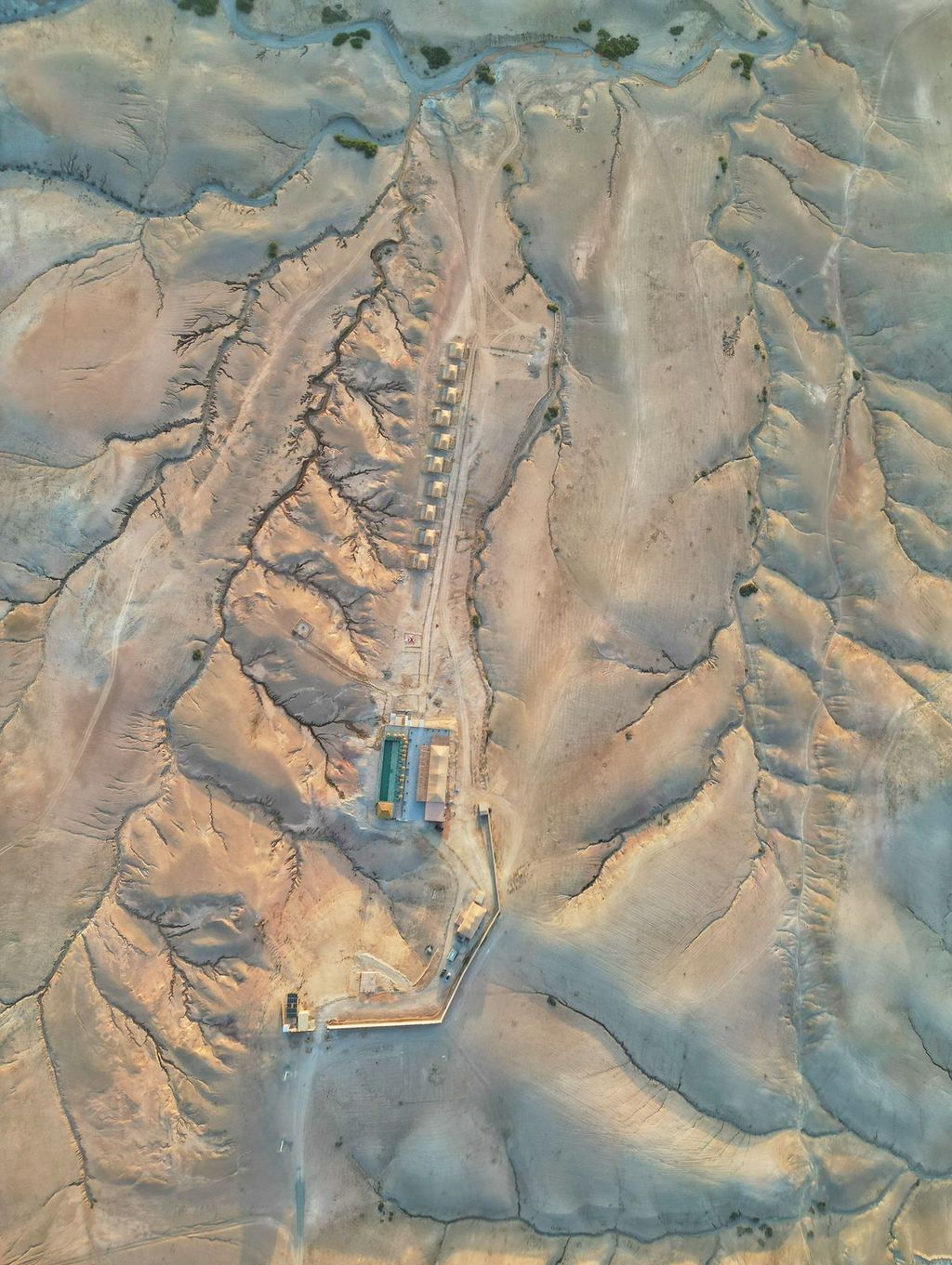
The last few kilometres are on a piste. The ground goes pale, the buildings stop, and the camp appears later than you expect: they are built low and they do not announce themselves. Check-in is usually mid-afternoon, though the exact hour is set by each camp and confirmed in writing with your booking.
The tent
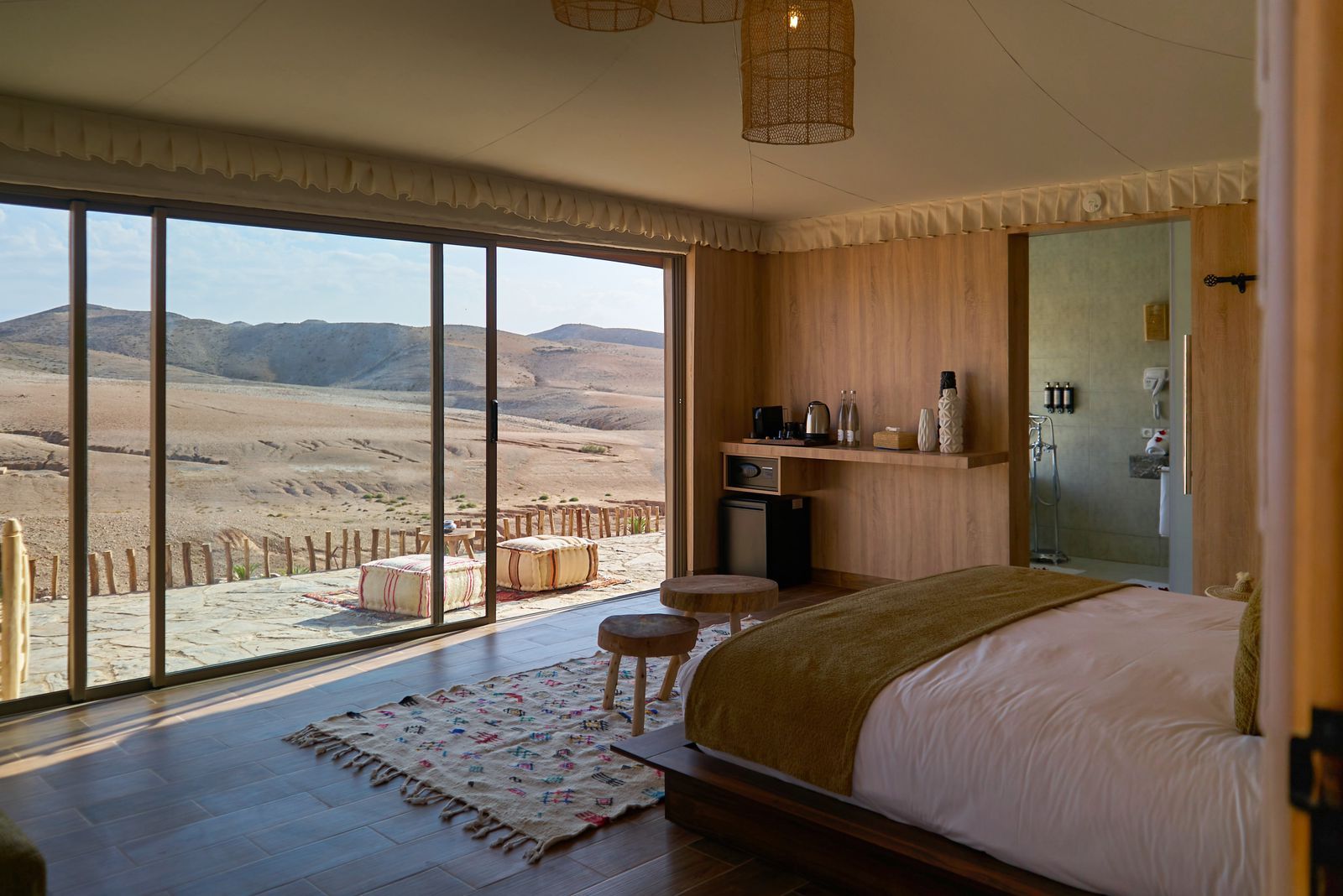
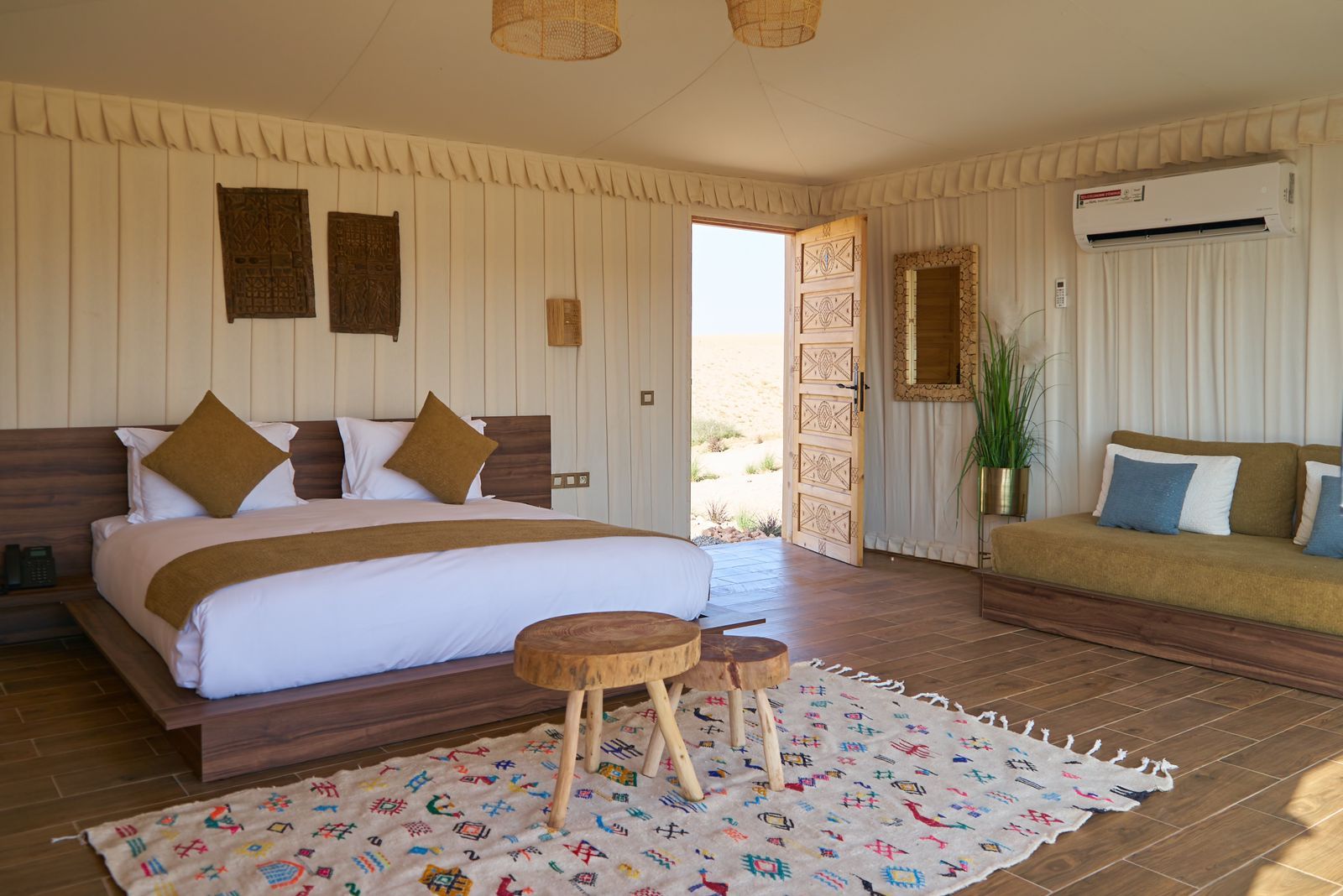
Canvas on a platform, furnished like a room, with a bathroom inside it. Air conditioning, heating, a minibar, a coffee machine, a safe, a hairdryer and toiletries. A terrace outside, facing the plateau.
The thing that surprises most people is the silence. Not quiet: silence, of a kind that is genuinely uncommon, broken by wind and occasionally by a dog somewhere out on the plateau.
The three categories differ only in the beds. We explain what that means in practice on the accommodation page.
Sunset
The plateau changes twice a day, and this is the better of the two. The light comes in sideways, the canyons fill with shadow, and the whole ground turns ochre for about forty minutes before going blue.
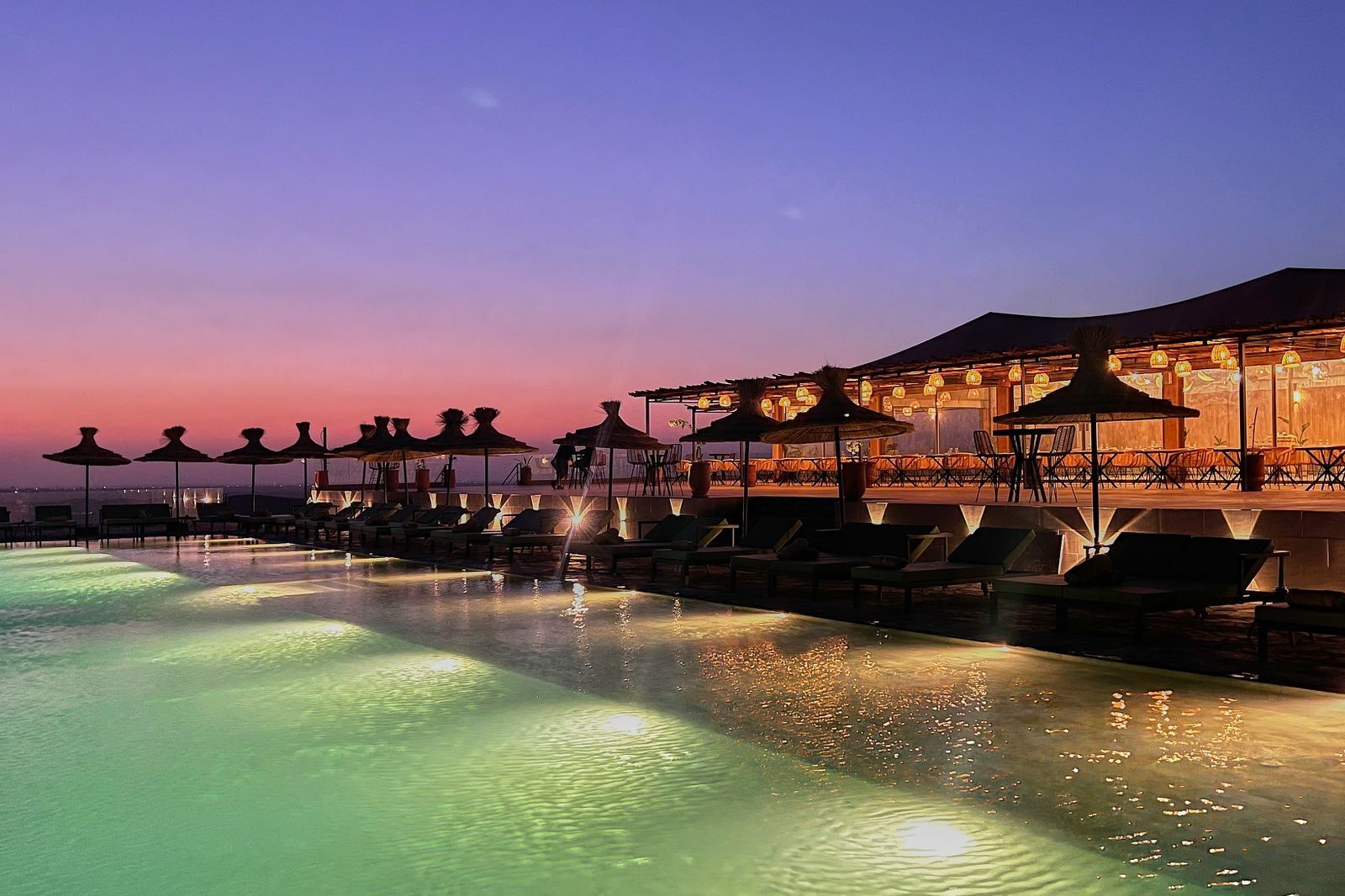
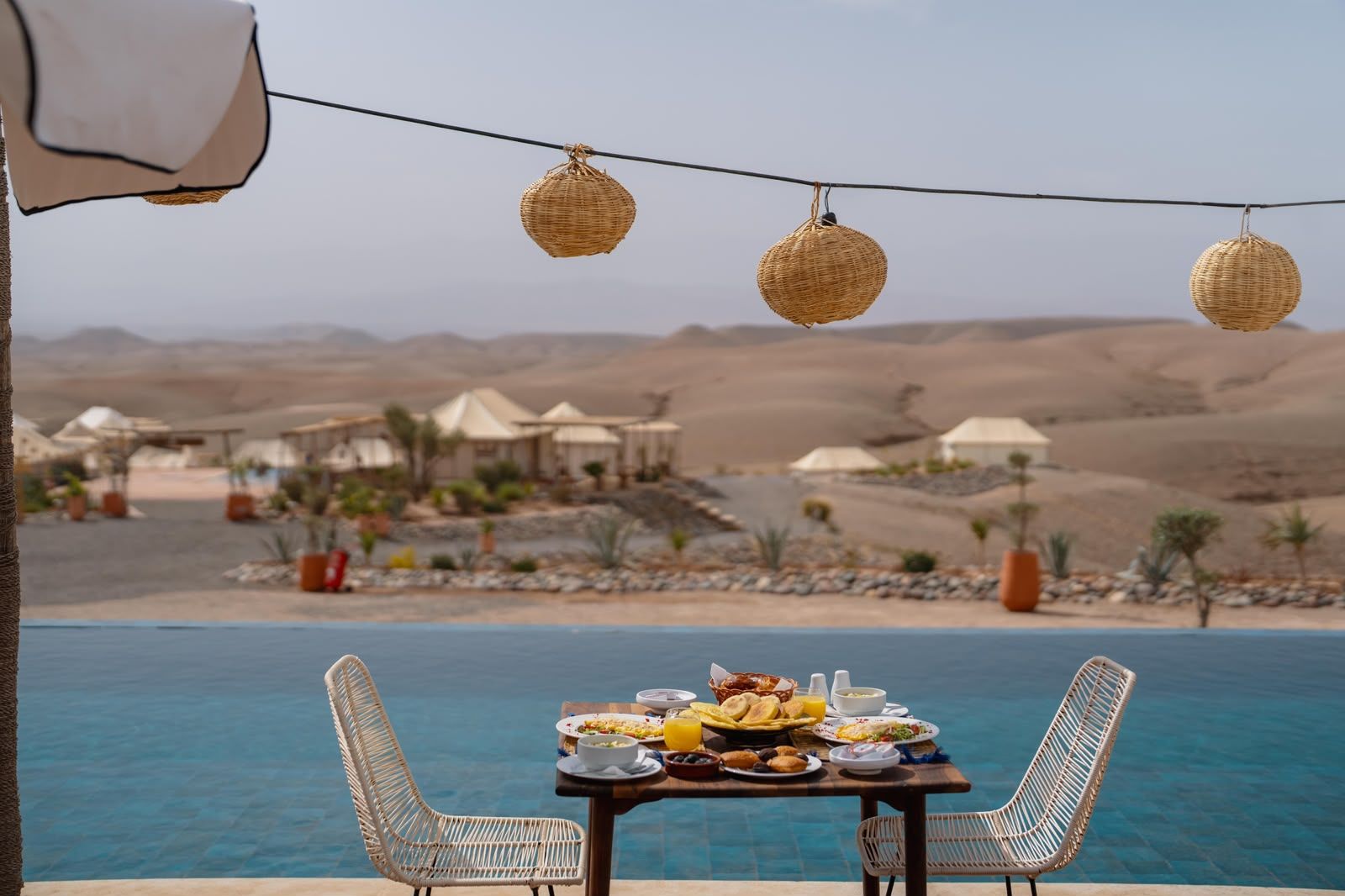
Most people watch it from the terrace or the pool. A few take a camel ride into it, which is the right hour for one. A few walk out to a ridge with a glass of tea, which costs nothing and is arguably the best version.
Dinner
Served after dark, outside when the weather allows, and cooked on site. It costs €55 per person and is not included in the room rate, which covers the tent and breakfast.
Vegetarian and other dietary requirements are straightforward if we pass them on when you book. Alcohol is served at some camps and not at others; ask rather than assume, in either direction.
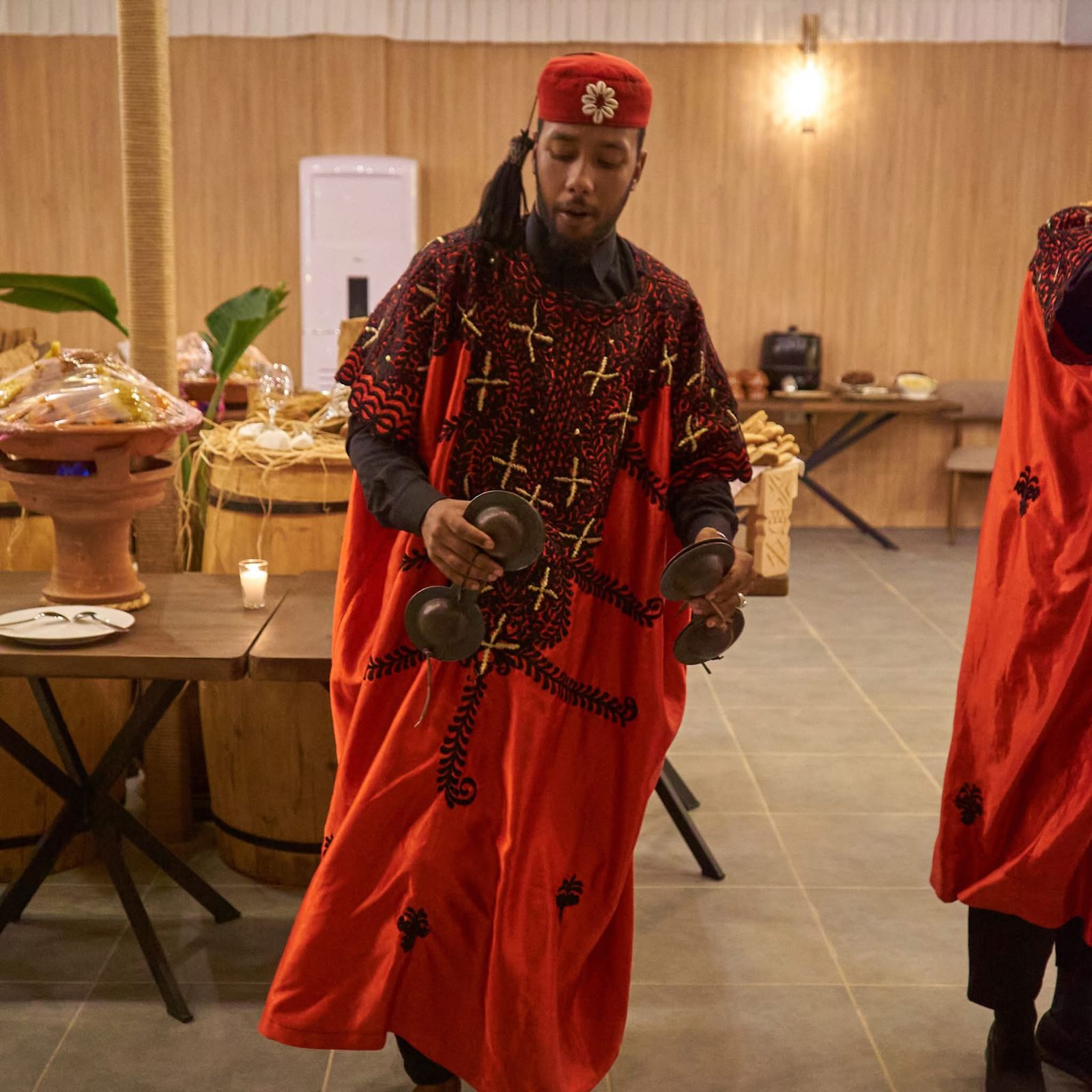
Many camps host gnawa musicians on some evenings, and a few put on a fire show afterwards. Say in advance whether you want an evening with music or without: both are arrangeable, and arriving to find the opposite of what you hoped for is avoidable.
The night sky
This is the part almost nobody anticipates. There is no light pollution on the plateau, and on a clear moonless night the sky is genuinely dark in a way that people who live in cities have not seen.
The camps dim their lighting late in the evening. Walk twenty metres from the common area, let your eyes adjust for ten minutes, and look up. It is free, it takes a quarter of an hour, and it is what people describe when they get home.
Sleeping
Two honest notes. Canvas is not soundproof: a camp with music will be audible from your tent, which is fine if you knew and irritating if you did not. And canvas lets light through, so if you sleep late an eye mask helps.
The temperature drops fast after dark, in every season. Heating is standard in the tents we book, and blankets are provided, but the walk from the dinner table to the tent in January is a cold one.
Morning
Get up for first light if you can manage it. The plateau at dawn is the second of its two good hours: flat, pale, completely still, with the Atlas sharp on the horizon before the haze builds.
Breakfast is included in the rate. Check-out is usually mid-morning, and if you are leaving on a late flight it is worth asking whether the camp can hold your bags while you use the pool.
What a night costs
| From | |
|---|---|
| Single tent, one person, B&B | €200 per night |
| Double tent, two people, B&B | €239 per night |
| Triple tent, three people, B&B | €299 per night |
| Dinner | €55 per person |
| Camel ride at sunset | €35 per person |
Rates are per tent, not per person. Children under three stay free; above that the rate depends on the camp, and we confirm it before you book rather than after.
Nothing is charged online. You pay in cash on the day, to the driver who brings you, and there is no cash point on the plateau.
Overnight or day trip?
| Day Pass | Overnight | |
|---|---|---|
| Hours | 11am to 6pm | Afternoon to the following morning |
| Sunset | No | Yes |
| Dinner | Lunch instead | Yes, €55 per person |
| The night sky | No | Yes |
| Sunrise | No | Yes |
| From | €49 per person | €200 per tent |
If the budget only stretches to a day, take the Night Pass rather than the Day Pass: two in the afternoon to ten at night includes the hour that matters. If you can stay, stay. One night is enough; a second changes nothing about the landscape, though doing nothing for two days is a legitimate reason in itself.
What to bring
- A jacket, in every season
- A swimsuit
- Closed shoes if you plan on a quad or a buggy
- Sun protection: there is almost no shade once you leave the camp
- Cash for payment on the day
- An eye mask if you sleep late
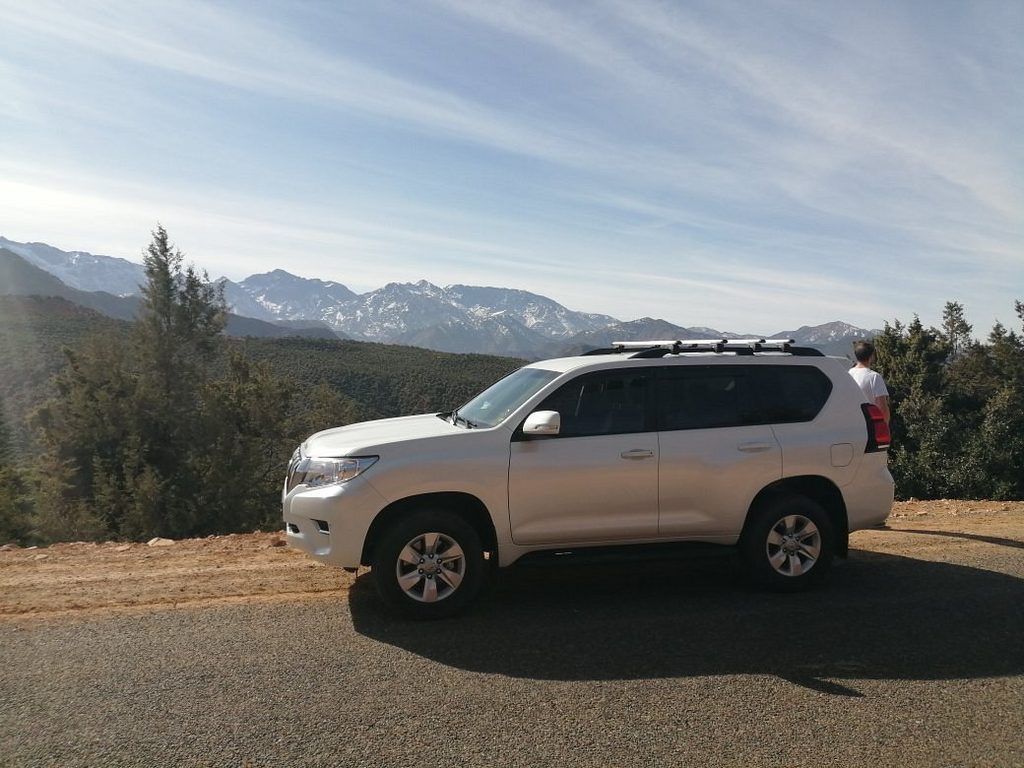
Getting there is covered separately in our guide to travelling from Marrakech, including pick-up from a riad in the medina.
Frequently asked questions
Is it worth staying overnight in the Agafay Desert?
Yes, if you can. The hour before dark and the hour after first light are the two that make the plateau memorable, and a day trip ending at six misses both.
Is dinner included in an Agafay overnight stay?
No. The rate covers the tent and breakfast. Dinner is served at the camp for €55 per person and is booked separately.
How cold does it get at night in Agafay?
Colder than people expect, in every season. Winter nights can approach freezing. The tents we book have heating and blankets, but bring a jacket.
Can you see stars in the Agafay Desert?
Yes. There is no light pollution on the plateau. Walk away from the common area, let your eyes adjust for ten minutes, and look up.
What time is check-in and check-out?
Usually mid-afternoon and mid-morning, though each camp sets its own hours and they are confirmed in writing with your booking.
Is one night enough in Agafay?
For most people, yes. One night covers sunset, dinner, the night sky and sunrise. A second night is for doing nothing, which is a fair reason but not a different landscape.
Do the tents have private bathrooms?
Every tent we book has a private bathroom inside it, with hot water, a walk-in shower and a private toilet. Nothing is shared with other guests.